Science
Science and health coverage clustered by underlying study or finding, so the reporting can be read against what the research actually claims.
A single paper can produce dozens of articles with contradictory headlines. Grouping them by the finding they describe makes it obvious where a headline has outrun the study's sample size, duration or confidence.
Preprints, peer-reviewed publication and institutional press releases are treated as different levels of evidence rather than interchangeable sources.
Scientists discover a natural compound that could protect the brain from too much salt
Eating too much salt may do more than raise blood pressure. It could also harm memory and social behavior. In a new study, Japanese researchers discovered that a soy-derived compound called LPC70 helped protect mice from several damaging effects of a high-salt diet. Mice given the supplement had lower blood pressure, better memory, and improved social interactions compared with mice consuming excess salt alone.
Physicists create a bizarre new quantum state called a fractional fermi sea
Physicists have discovered a strange new state of quantum matter in which ultracold atoms defy familiar organizational rules, forming a highly excited yet surprisingly orderly configuration called a "fractional Fermi sea." The discovery challenges established quantum theories and hints at exotic quasiparticles that scientists have dubbed potential "super-Fermions."
Eating blueberries every day may have a surprising effect on your mood
Eating blueberries every day could have surprising effects on mood, according to a small study that found greater reductions in depressive symptoms among older adults who consumed the fruit for three months. Researchers also detected changes in gut microbial enzymes, suggesting a possible gut-brain connection, although the mood benefits were not statistically significant compared with a placebo.
Magic mushroom ingredient takes the fight out of aggressive fish
A psychedelic compound found in magic mushrooms appears to have an unexpected effect: calming highly aggressive fish. Researchers discovered that low doses of psilocybin significantly reduced aggressive attacks in mangrove rivulus fish without disrupting their normal social interactions. The findings suggest psilocybin may selectively calm escalating aggression rather than simply suppressing all behavior.
Scientists discover a surprising twist in Japan's 7,300-year-old volcanic apocalypse
A catastrophic volcanic eruption 7,300 years ago devastated Japan, but new research reveals that its impact on prehistoric populations was far more complex than previously believed. While some communities disappeared or declined, others unexpectedly flourished as survivors migrated, adapted, and found new ways to thrive.
Scientists uncover 3 key brain pathways linked to lasting depression relief
Researchers have uncovered three brain pathways linked to lasting improvements in people receiving deep brain stimulation for severe, treatment-resistant depression. They also discovered that patients who failed to improve after two years shared a striking pattern: insufficient stimulation of a crucial brain connection. The findings suggest that millimeters in electrode placement could make a major difference in treatment outcomes.
Two monster black holes could collide in just 100 years
Astronomers have uncovered compelling evidence of two supermassive black holes spiraling toward a potentially spectacular collision at the center of galaxy Mrk 501. A previously unseen jet of particles revealed the likely presence of a second black hole, with observations suggesting the pair completes an orbit every 121 days. Depending on their masses, these cosmic giants could merge in as little as 100 years.
Scientists discover that male and female skin play by different rules
Scientists have uncovered a surprising difference in how male and female skin repairs and renews itself. By tracking individual skin stem cells in living mice for five months, researchers discovered that female cells work together in a highly coordinated way, while male cells operate more independently. This synchronization, driven by sex hormones, helps explain why wounds heal faster in female mice, especially during the first few days.
Scientists who discovered a third form of magnetism win major physics prize
Physicists have uncovered a hidden third form of magnetism that challenges more than 100 years of established physics. Called altermagnetism, the discovery could transform future computing and electronics while opening an entirely new frontier in quantum research.
APOD: 2026 October 18 – Sonified: Eagle Nebula Pillars
NASA published an APOD entry titled 'Sonified: Eagle Nebula Pillars' on 2026 October 18.
Scientists find a youth protein that helps aging brain cells act young again
Scientists have discovered that a protein linked to youth helps protect the brain’s immune cells from age-related decline. Restoring the protein in older mice improved the cells’ ability to clear debris and reduced signs of inflammation, raising hopes for future treatments targeting brain aging and Alzheimer’s disease.
NASA’s SpaceX launch lights up the sky with a giant glowing jellyfish
A SpaceX Falcon 9 rocket created a dazzling, jellyfish-shaped glow across the eastern United States as sunlight illuminated its exhaust during an early morning launch. The mission delivered equipment and scientific experiments to the International Space Station, including research that could advance treatments for blindness, Alzheimer's, Parkinson's, and other diseases.
Archaeologists discover 1,200-year-old mummified hairless dog in Peru
Archaeologists have discovered 1,200-year-old remains of Peru’s famous hairless dogs at an ancient Wari Empire burial site, including remarkably preserved mummies and puppies buried alongside humans. Their unusual teeth, diets, and burial arrangements reveal surprising clues about how ancient Peruvians cared for, bred, and sometimes discarded their dogs.
NASA’s Roman Space Telescope exceeds expectations by nearly 30%
NASA’s Nancy Grace Roman Space Telescope has exceeded expectations after engineers made incredibly tiny adjustments to sharpen its view of the universe. By moving a mirror just one-sixteenth the width of a human hair, the team helped bring its powerful instruments into near-perfect alignment. Roman’s Wide Field Instrument now produces image quality nearly 30% better than predicted, promising exceptionally sharp cosmic surveys.
This bird flies thousands of miles, but its wings have a catch
Scientists have uncovered an unexpected trade-off in the wings of the European nightjar, a bird that migrates thousands of kilometers but sacrifices high-speed flight efficiency to hunt insects with remarkable agility. Even more surprisingly, it generates thrust on the upward wingbeat, a technique that could inspire new flying technologies.
Brain cells meant to protect us may be fueling cognitive decline
Scientists have uncovered a surprising cause of age-related cognitive decline involving brain cells previously thought to be entirely beneficial. As these cells become dysfunctional, they can produce abnormal amounts of myelin, disrupting nerve fibers and potentially contributing to worsening memory and thinking skills.
NASA’s Webb reveals the wild weather of a mysterious world 20 light-years away
NASA’s James Webb Space Telescope has revealed that a turbulent world 20 light-years away has a surprisingly orderly weather system, with three recurring atmospheric states driven by temperature changes and shifting clouds. The breakthrough gives scientists a powerful new tool for uncovering weather patterns on distant worlds and understanding the conditions that shape their atmospheres.
Scientists discover how deep sleep builds muscle, burns fat, and boosts the brain
Scientists have discovered a surprising two-way relationship between sleep and growth hormone, revealing how the brain carefully balances physical recovery with wakefulness. The findings could help explain why poor sleep harms metabolism and brain health, potentially opening the door to new treatments for sleep and neurological disorders.
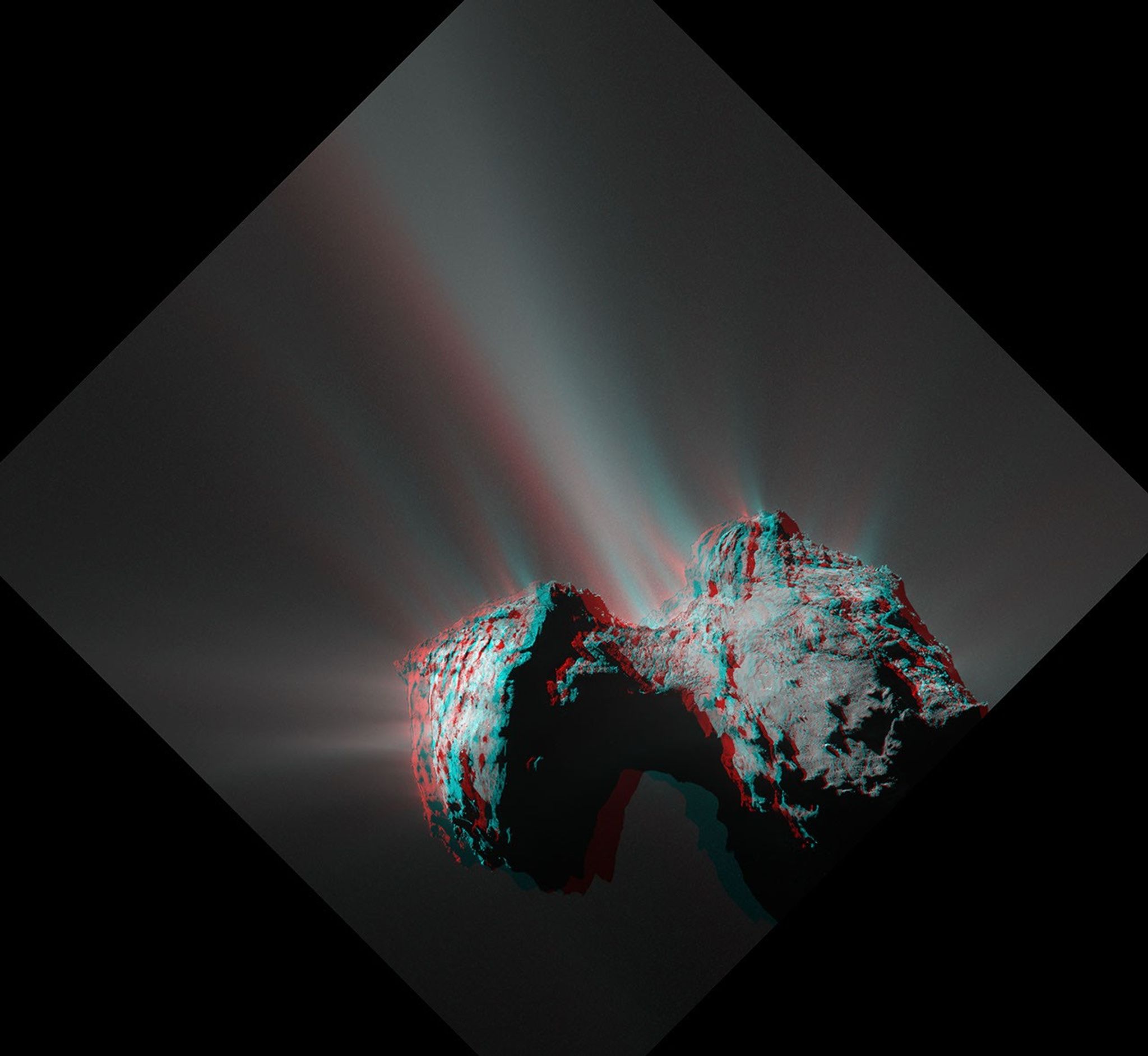
APOD: 2026 October 17 – 3D 67P
NASA's Astronomy Picture of the Day for 17 October 2026 showcases a stereoscopic 3D image of comet 67P viewable with red/blue glasses.
Scientists predicted doomsday for November 13, 2026. Should we be worried?
In 1960, scientists predicted that runaway population growth would bring humanity to the brink of destruction on November 13, 2026, and their mathematical forecasts remained surprisingly accurate for decades. But as birth rates declined and population growth slowed, the terrifying prediction unraveled, revealing how even convincing scientific models can fail when human behavior changes.
SpaceX just delivered some very strange cargo to the International Space Station
SpaceX just delivered some surprisingly strange cargo to the International Space Station, including tiny brain models, 3D heart tissue, and technology for making artificial retinas in space. Scientists hope these experiments could unlock new ways to treat devastating brain diseases, restore eyesight, and test future medicines. The shipment also includes materials for creating unusual glass in near weightlessness and the station’s final upgraded solar arrays.
James Webb reveals a strange bulge in an alien planet's atmosphere
Astronomers using the James Webb Space Telescope have discovered that a distant alien planet's atmosphere is surprisingly lopsided. Located 1,300 light-years away, the scorching gas giant WASP-17b experiences powerful winds that redistribute heat, causing one side of its atmosphere to bulge outward. A groundbreaking new mapping technique revealed these hidden distortions, confirming predictions about how extreme temperatures and winds shape alien worlds.

NASA Names Stephen Cash Marshall Space Flight Center Director
NASA Administrator Jared Isaacman appointed Stephen Cash as director of the Marshall Space Flight Center, effective Oct. 19, 2026.

Artemis II Heat Shield After Splashdown
After Artemis II splashed down on April 10, 2026, U.S. Navy divers imaged Orion's heat shield and NASA later analyzed its thermal protection performance.

I Am Artemis: Allison Mjoen
Allison Mjoen, NASA’s Exploration Ground Systems operations manager, watched her family see the SLS rocket launch as part of Artemis preparations.
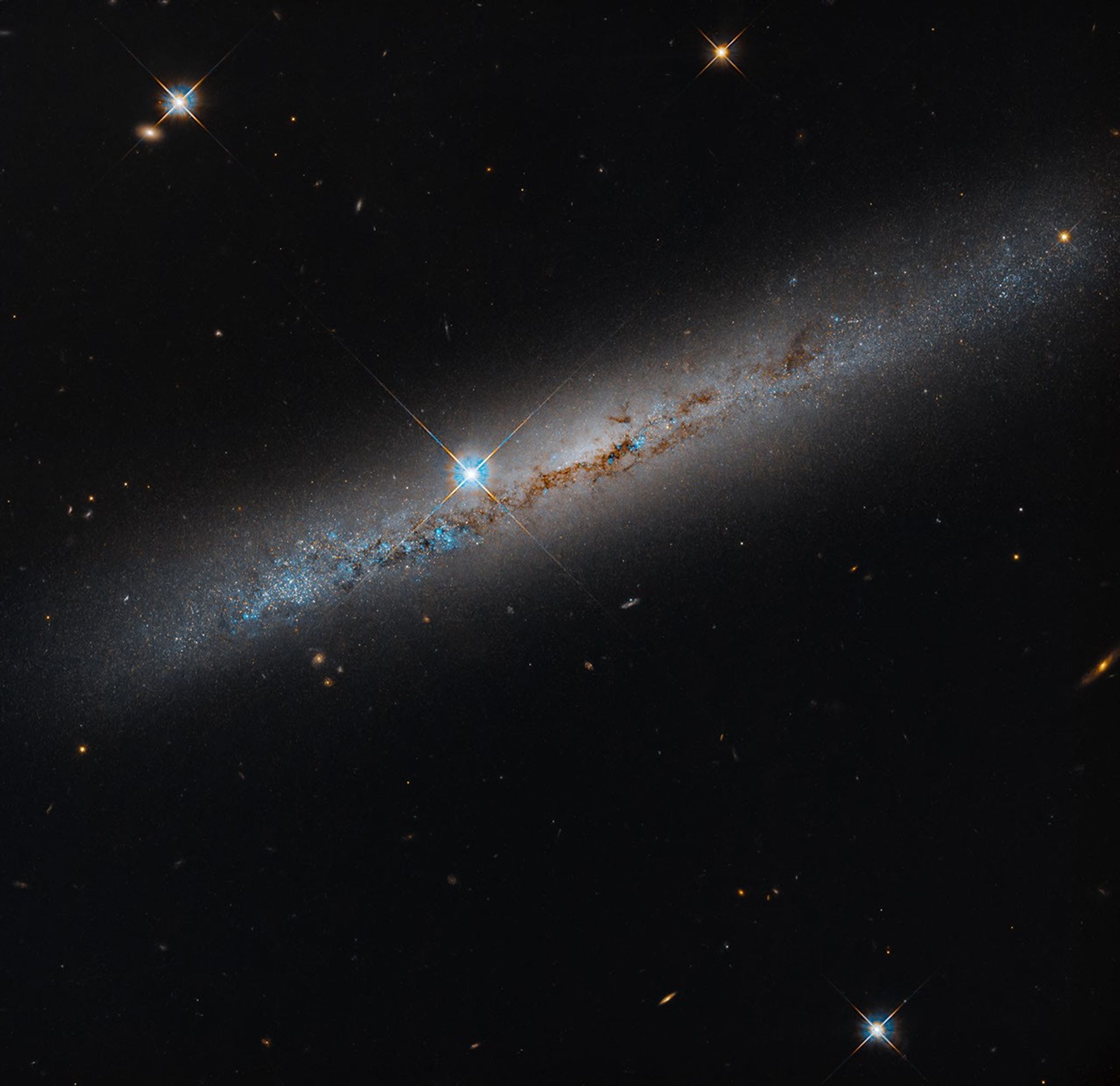
NASA’s Hubble Spies Spiral’s Edge
NASA released an article titled 'NASA’s Hubble Spies Spiral’s Edge'.
The uranium cubes that exposed Nazi Germany’s nuclear failure
Scientists investigating Nazi Germany's secret nuclear program have uncovered evidence that its final experimental reactor was nowhere near as close to working as previously claimed. Analysis of surviving uranium cubes and wartime documents reveals that Germany lacked the enormous quantities of uranium and heavy water needed to make its reactor operational.
NASA captures strange waves high above Hurricane Simon
As Hurricane Simon unleashed destructive winds and flooding along Mexico’s coast, NASA satellites captured an extraordinary sight: massive atmospheric waves rippling high above the storm. The rare images reveal how powerful hurricanes can disturb the upper atmosphere, creating patterns that are usually invisible from space.
APOD: 2026 October 16 – Chasing the International Space Station
NASA published an APOD entry titled 'Chasing the International Space Station' on 2026-10-16.

Isaias Dims the Gulf Coast
NASA published an article titled 'Isaias Dims the Gulf Coast' on October 16, 2026.
“Crawzilla” was huge. Then scientists found an even bigger crayfish
A nationwide search for giant crayfish uncovered a record-breaking Tennessee specimen and a surprising mystery about how big these freshwater creatures can grow. Scientists found that North American crayfish seem to hit a biological size limit, possibly because of their muscles or protective shells.
Antarctica’s sea ice has undergone a stunning reversal
Antarctic sea ice reached its third-lowest winter maximum in 2026, extending a remarkable decline that began after years of record-breaking growth. Scientists are investigating whether the dramatic reversal signals a long-term shift in Antarctica's frozen landscape.
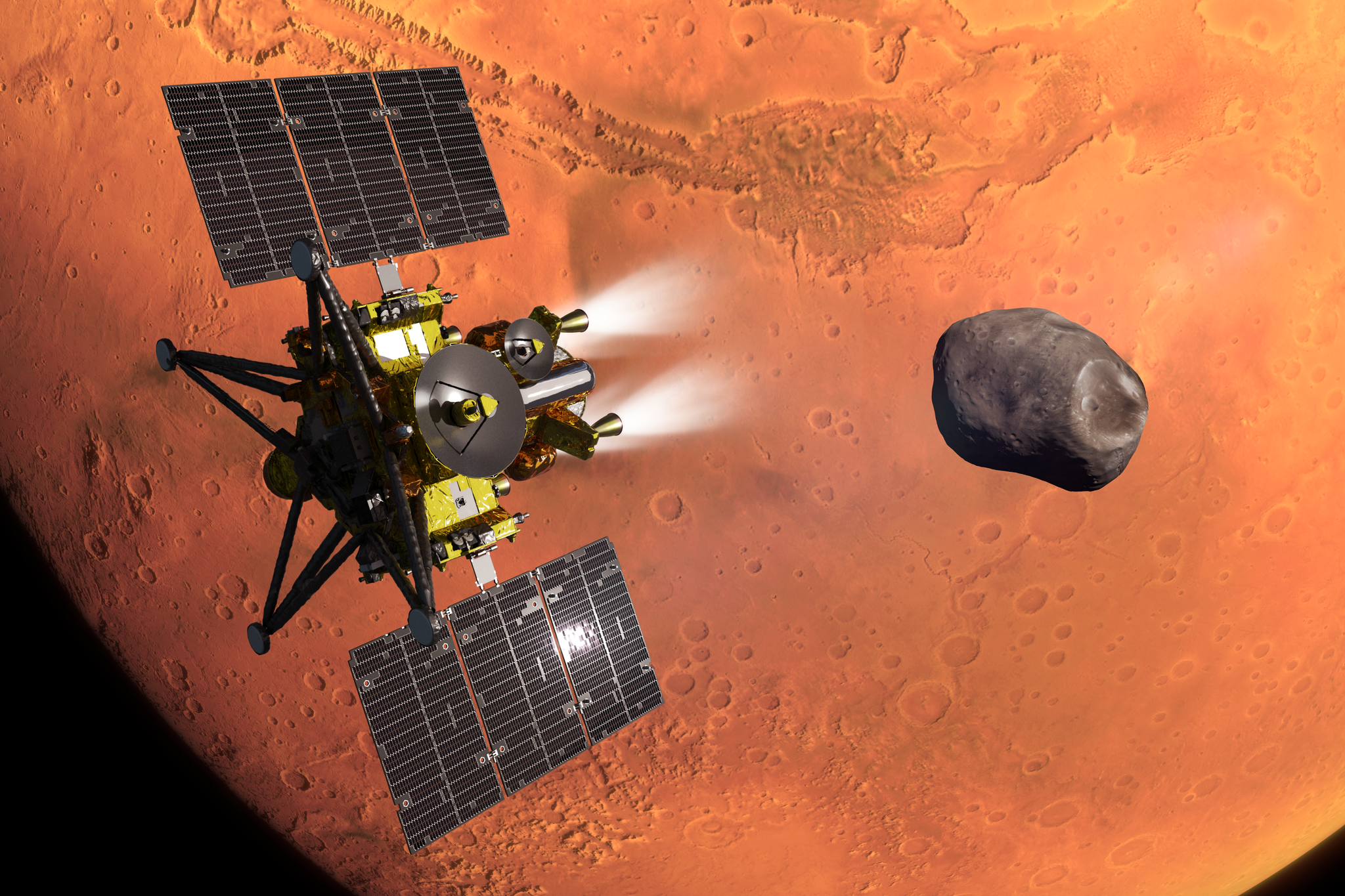
NASA to Help Unlock Mysteries of Mars’ Moons in Upcoming Mission
NASA will support JAXA’s MMX mission to study Mars’ moons Phobos and Deimos and return a Phobos sample to Earth.
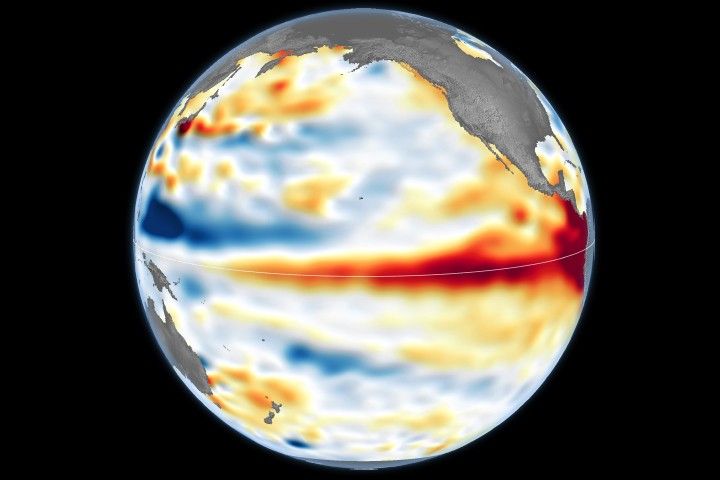
NASA Satellites Observe Historic 2026 El Niño
NASA satellites observed a historic 2026 El Niño event and released a visualization comparing ocean data from 2025 and 2026.
Arctic sea ice hits another troubling low in 2026
Arctic sea ice is shrinking in both winter and summer, with satellite records revealing that the region's remaining ice is becoming thinner, younger, and more vulnerable to melting. Despite a recent slowdown in summer losses, scientists warn that the Arctic could experience a nearly ice-free summer before 2050.
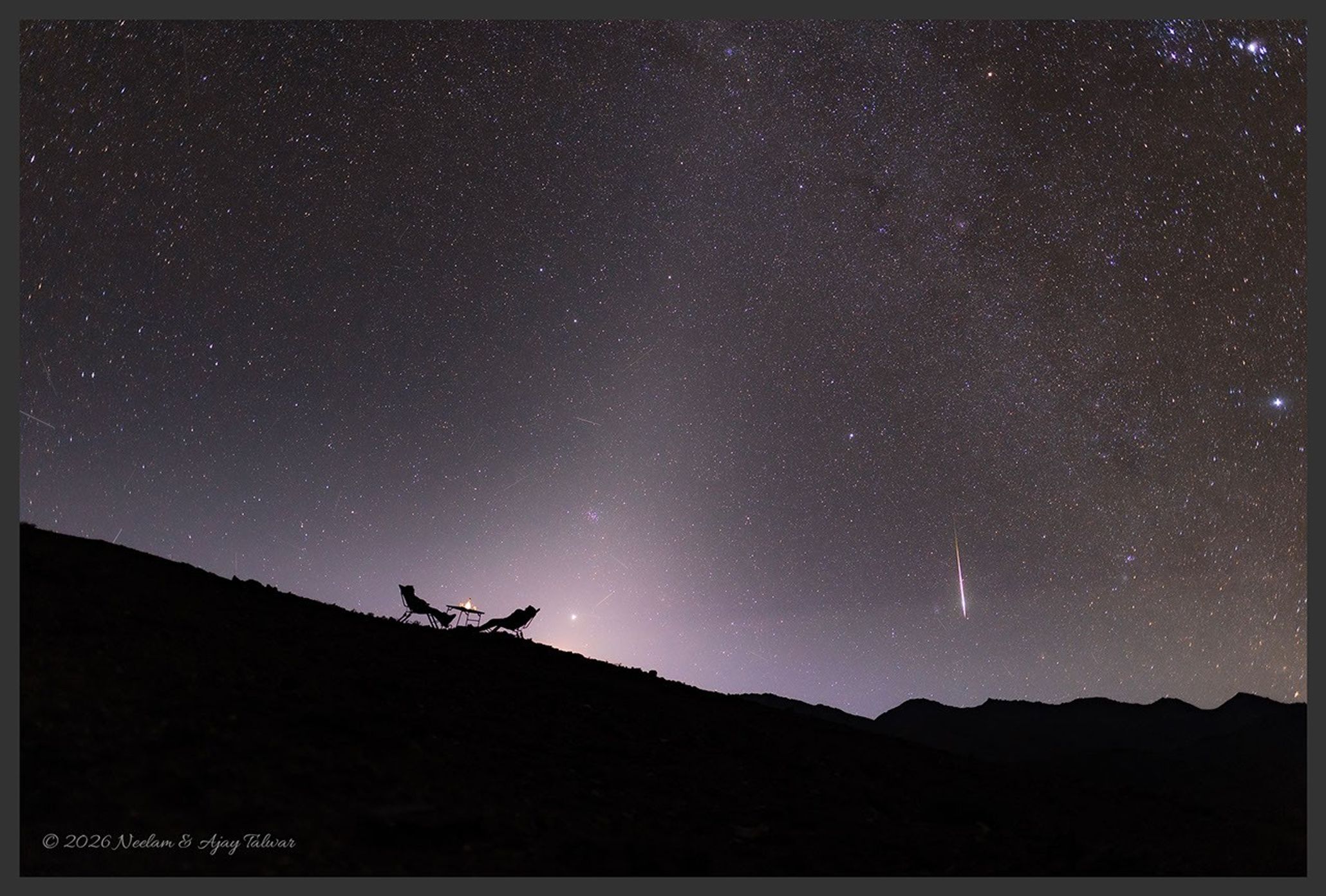
APOD: 2026 September 19 – A Zodiacal Night
APOD Science APOD APOD: 2026 September 19 –… Today’s APOD Archive Submissions Index Search Calendar RSS Education About Discuss APOD Astronomy Picture of the Day Discover the cosmos! Each day a different image or photograph of our fascinating universe is featured, along with a brief explanation written by a professional astronomer. Night Sky Annotation A Zodiacal Night Explanation: Also known as the false dawn , a luminous band of zodiacal light is captured in this dark night skyscape. The serene view was recorded just before the beginning of astronomical twilight during September’s star party at the remote Hanle Dark Sky Reserve, Ladakh, India, planet Earth. At about 4,500 meters altitude, the dark sky reserve presents a haven for hardy stargazing and astrophotography enthusiasts. While meteors streak through the night, bright planet Jupiter appears immersed in the faint zodiacal glow near the eastern horizon. Follow the zodiacal band toward the zenith to find open star cluster M44 and a yellowish tinged planet Mars near the center of the frame. In fact, serendipitous detections of interplanetary dust by NASA’s Juno spacecraft suggest Mars itself is the source of dust that back sc
NASA Invites Media to Albania Artemis Accords Signing Ceremony
Credit: NASA The Republic of Albania will sign the Artemis Accords during a ceremony at 12 p.m. EDT on Monday, Sept. 21, at NASA Headquarters in Washington, becoming the 73rd country signatory. NASA Deputy Administrator Matt Anderson will host Albania’s Minister for Europe and Foreign Affairs Ferit Hoxha and Ambassador of the Republic of Albania to the United States Ervin Bushati for the ceremony, together with U.S. Department of State officials. This event is in person only. Media interested in attending must RSVP no later than 10 a.m. on Sept. 21 to: hq-media@mail.nasa.gov . NASA’s media accreditation policy is online. In 2020, during the first Trump Administration, the United States, led by NASA and the State Department, joined with seven other founding nations to establish the Artemis Accords, responding to the growing interest in lunar activities by both governments and private companies. The Artemis Accords introduced the first set of practical principles aimed at enhancing the safety, transparency, and coordination of civil space exploration on the Moon, Mars, and beyond. Learn more about the Artemis Accords at: https://www.nasa.gov/artemis-accords -end- Camille Gallo / Eliz
NASA-JAXA XRISM Mission Sees Pulsar Gathering Companion’s ‘Wind’
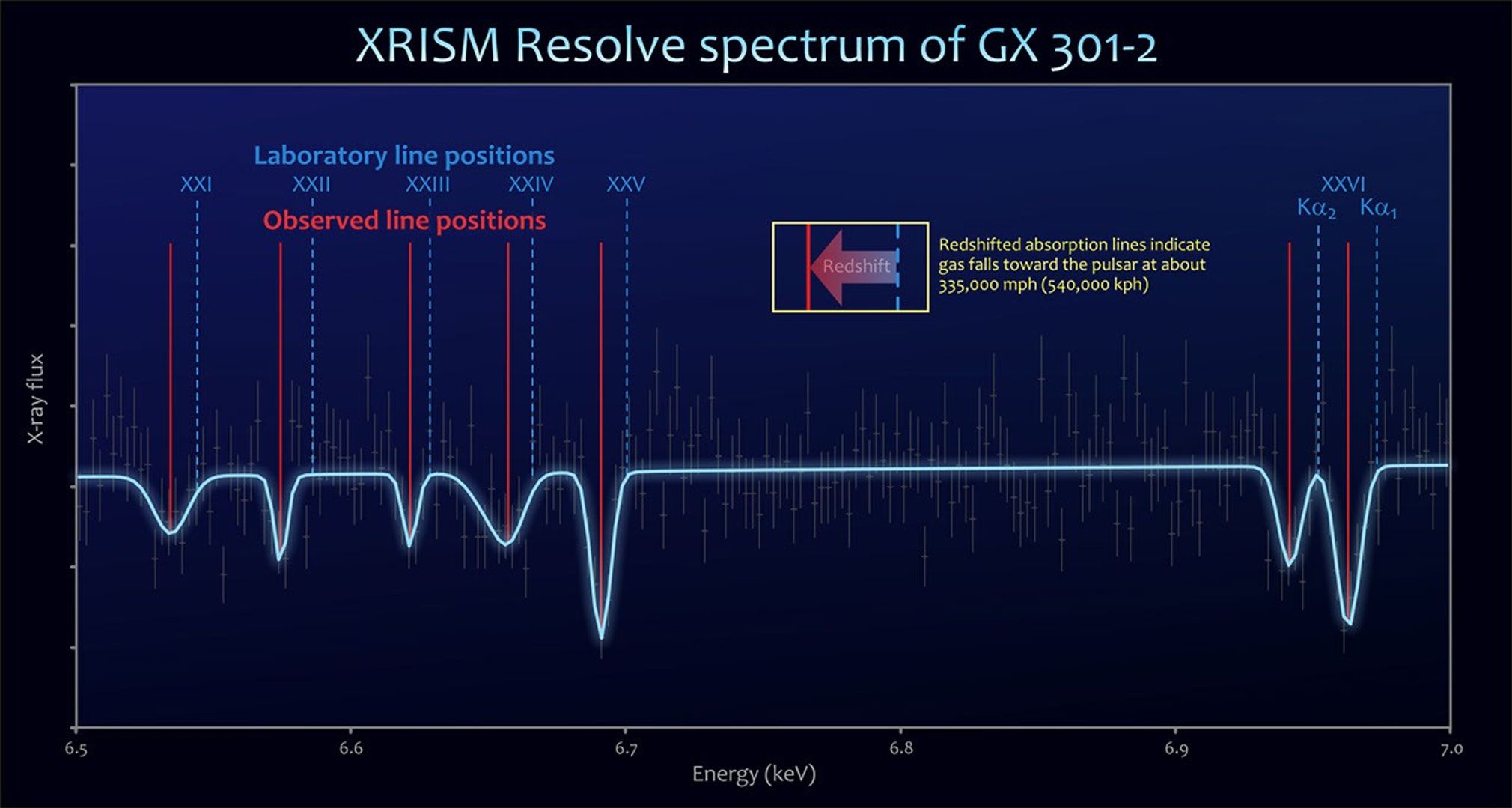
5 min read NASA-JAXA XRISM Mission Sees Pulsar Gathering Companion’s ‘Wind’ Using data from the Japan-led XRISM (X-ray Imaging and Spectroscopy Mission) observatory, astronomers have directly observed a giant star’s outflow, called a stellar wind, being captured by its compact companion and providing the power source for strong X-ray flares. The research is part of NASA’s exploration of the extreme universe to better understand how the cosmos works. “We’ve never before seen clear indications of wind plasma falling onto a compact object,” said Roi Rahin, a researcher at UMBC (University of Maryland, Baltimore County) and NASA’s Goddard Space Flight Center in Greenbelt, Maryland. “We can now test our understanding of these processes in much greater detail.” A paper describing the findings published Friday in the journal Science Advances. The target system is BP Crucis, a high-mass X-ray binary located about 13,000 light-years away in the southern constellation Crux. The primary star, known as Wray 977, is a blue hypergiant about 40 times the Sun’s mass and 60 times its size. It’s so big, hot, and luminous that ionized gas constantly streams away from it, a phenomenon astronomers call
NASA Awards SpaceX Three Crew Flights to Space Station
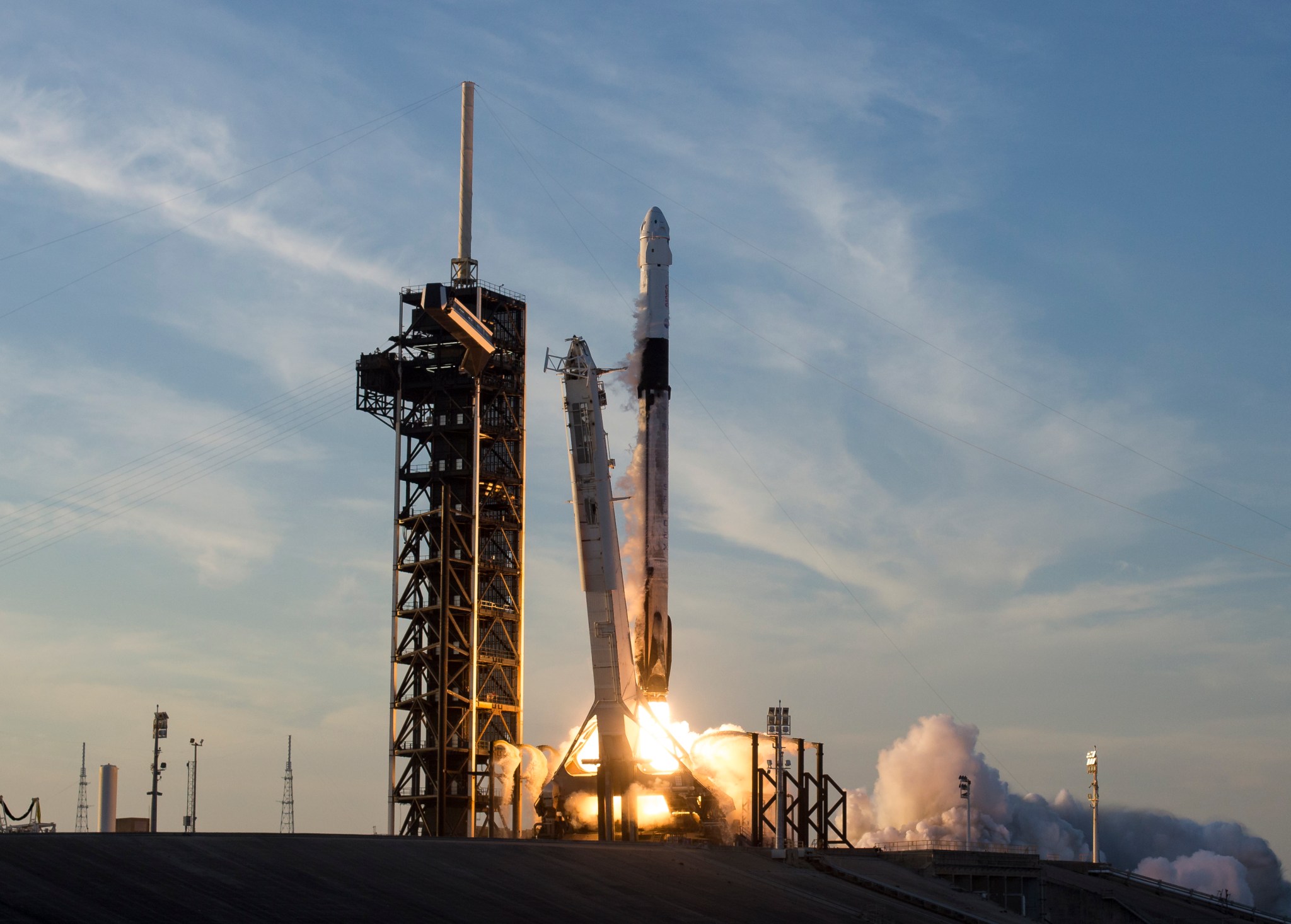
A SpaceX Falcon 9 rocket carrying the company's Dragon spacecraft launches NASA’s SpaceX Crew-10 mission to the International Space Station on March 14, 2025. NASA/Aubrey Gemignani Editor’s note: This feature was updated on Sept. 18, 2026, to add additional details on mission readiness dates. To continue regular crew transportation to the International Space Station, NASA has awarded SpaceX three additional missions through a contract modification. As part of the agency’s Commercial Crew Transportation Capability (CCtCap) contract, this change brings the total missions for SpaceX to 17 and helps NASA to maintain access to the space station with two unique commercial crew industry partners. This is a firm fixed-price, indefinite-delivery/indefinite-quantity contract modification for the Crew-15, Crew-16, and Crew-17. The value of this modification for all three missions and related mission services is $946 million. The amount includes ground, launch, in-orbit, and return and recovery operations, cargo transportation for each mission, and a lifeboat capability while docked to the International Space Station. The period of performance runs through 2030, with mission readiness dates in
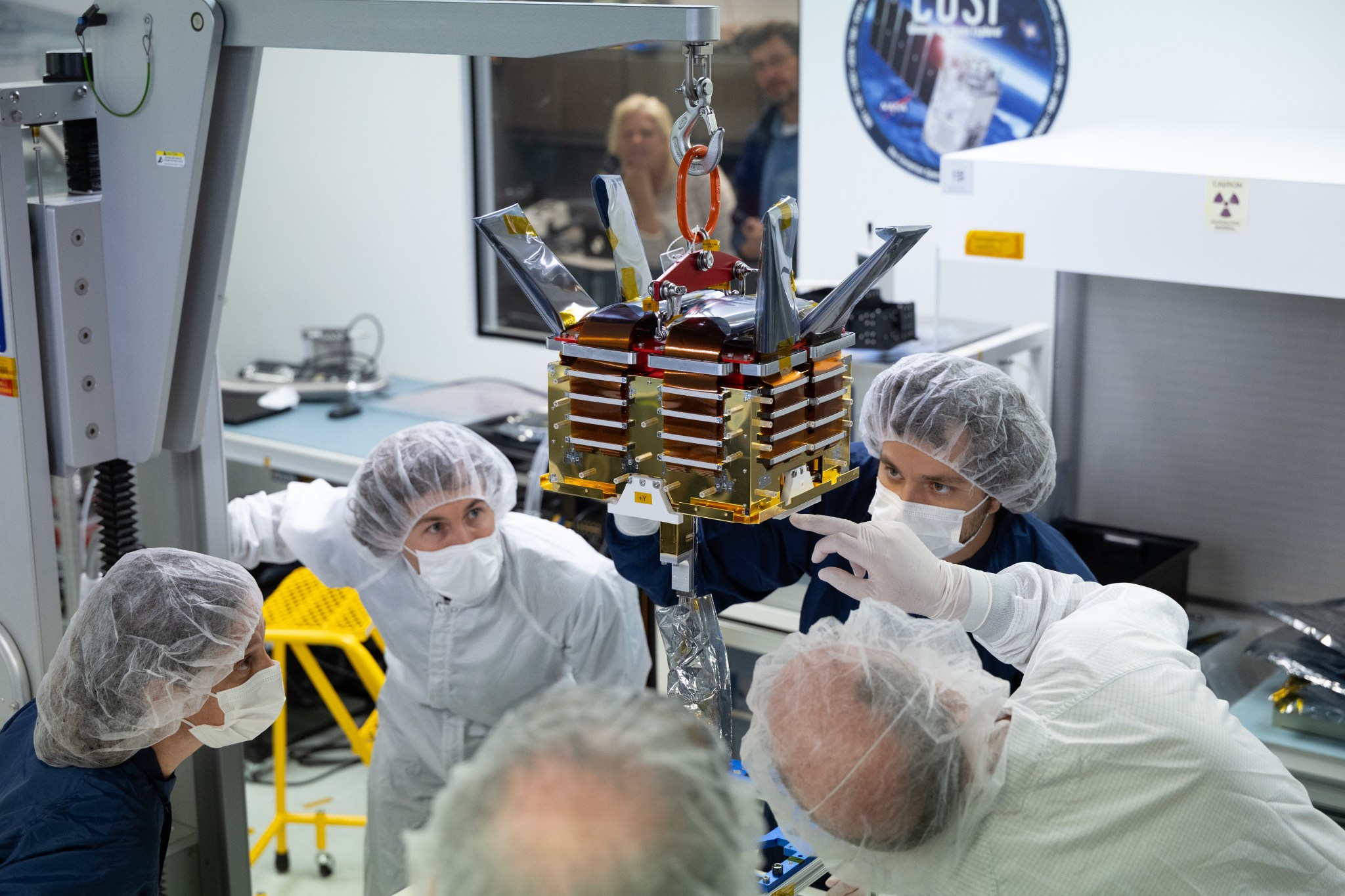
COSI Telescope Comes Together
UC Berkeley/Alan Toth UC Berkeley engineers and managers watch as the COSI (Compton Spectrometer and Imager) detector assembly is slowly raised from a table in this July 8, 2026, image. The four pieces of silver material on the top of the detector box cover the flex circuits, which carry signals from the detectors to the readout electronics. COSI is a wide-field gamma-ray telescope that will study energetic phenomena in the Milky Way and beyond, including the creation and destruction of matter and antimatter and the final stages of the lives of stars. The mission is a collaboration between the University of California, Berkeley’s Space Sciences Laboratory; the University of California, San Diego; the Naval Research Laboratory; NASA's Goddard Space Flight Center; Northrop Grumman; Space Dynamics Laboratory; the Italian Space Agency; and a number of research institutions. Image credit: UC Berkeley/Alan Toth ]]>