NASA Satellites Observe Historic 2026 El Niño
First reported Thu, 15 Oct 2026 17:59:22 GMT · Last updated
Analysis updated · By Newsei
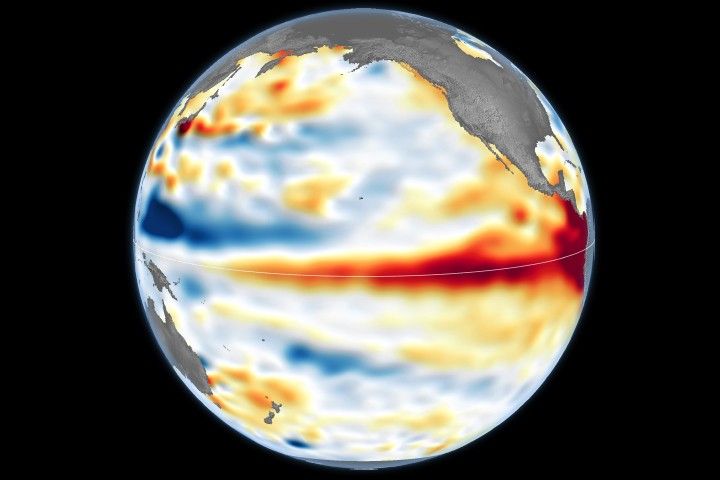
NASA satellites observed a historic 2026 El Niño event and released a visualization comparing ocean data from 2025 and 2026.
Why it matters: Understanding the 2026 El Niño helps improve climate forecasts and prepares communities for potential weather impacts.
Newsei analysis
Inference, not reporting: this section is Newsei's AI-assisted synthesis of the sources below (nvidia/nemotron-3-super-120b-a12b:free). Facts come only from the linked original articles.
NASA’s Earth-observing satellites collected sea surface temperature, visible wavelength, and sea surface height data for the months of 2025 and 2026. The agency’s Scientific Visualization Studio combined these datasets into side‑by‑side maps, highlighting El Niño signals with pop‑up labels. The visualization shows that the 2026 El Niño is stronger than typical events and is described as rarer than a solar eclipse.
What we know
Still unclear
- NASA satellites observed a historic El Niño event in 2026.NASA
- The visualization compared sea surface temperature anomaly, apparent visible wavelength, and sea surface height anomaly for the same months in 2025 and 2026.NASA
- Signals of El Niño were highlighted with pop‑up labels in the visualization.NASA
- The phenomenon is described as rarer than a solar eclipse.NASA
1 source in this cluster
- NASANASA Satellites Observe Historic 2026 El Niño
6 Min Read NASA Satellites Observe Historic 2026 El Niño This visualization compares three ocean data products, sea surface temperature anomaly, apparent visible wavelength, and sea surface height anomaly, over the same months in 2025 and 2026. Signals of El Niño in each map are highlighted with pop-up labels. Credits: NASA’s Scientific Visualization Studio A phenomenon rarer than a solar eclipse and more powerful than any single storm system is unfolding this fall, and NASA is tracking it closely. El Niño is a natural climate pattern that emerges roughly every two to seven years marked by warmer-than-normal water temperatures in parts of the equatorial Pacific. NASA scientists are keeping watch as it flips trade winds, redistributes ocean heat, scrambles rain patterns, and raises sea surface height across parts of the Pacific. As of October, the National Oceanic and Atmospheric Administration (NOAA) has said that there’s an 83% chance that the strongest El Niño since 1950 is currently unfolding. People around the world, including farmers, firefighters, and coastal communities, are already experiencing the effects in different ways. Follow along with these maps as NASA tracks El Ni
Thu, 15 Oct 2026 17:59:22 GMT
Timeline
- 2026-10-15 17:59 UTC · NASA
The agency states that the observed 2026 El Niño is a historic event and rarer than a solar eclipse.
- 2026-10-15 17:59 UTC · NASA
NASA’s Scientific Visualization Studio published a side‑by‑side comparison of ocean data from 2025 and 2026 highlighting El Niño signals.
How to read this page
- Headlines, quotes and facts come from the linked original articles (reporting).
- "Newsei analysis" and "Why it matters" are AI-assisted synthesis (inference).
- "Confirmed" means two or more independent outlets reported the same claim.
Methodology · Source profiles & bias labels · Corrections policy · Report an error: info@newsei.com
Share this timeline
Embed shows this story's live timeline on your own site and links back here.
Explainer, claims and timeline generated automatically from the sources above by nvidia/nemotron-3-super-120b-a12b:free on Sun, 18 Oct 2026 23:33:36 GMT. Always check the original reporting.