APOD: 2026 October 17 – 3D 67P
First reported Sat, 17 Oct 2026 04:05:00 GMT · Last updated
Analysis updated · By Newsei
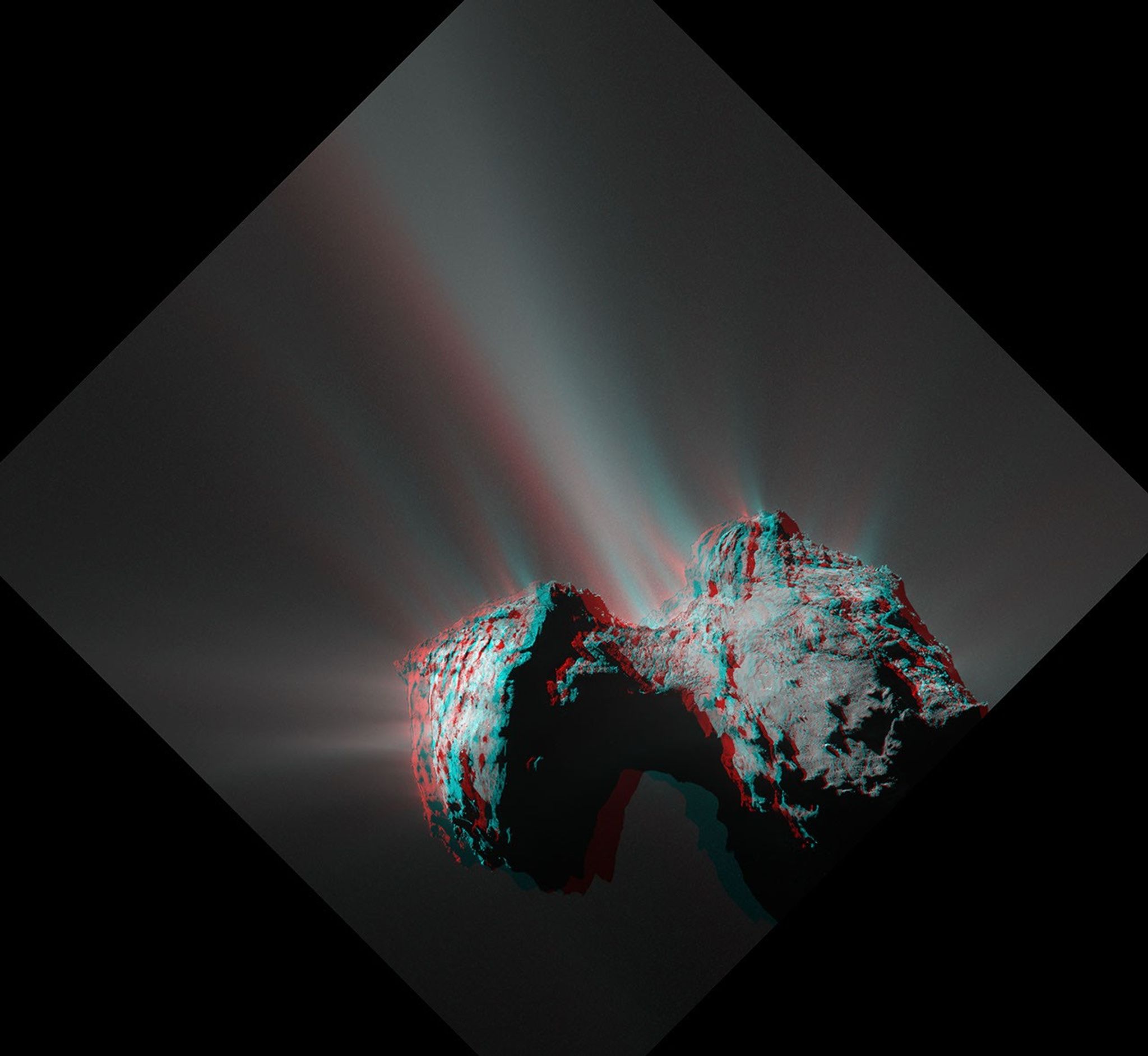
NASA's Astronomy Picture of the Day for 17 October 2026 showcases a stereoscopic 3D image of comet 67P viewable with red/blue glasses.
Why it matters: The image lets the public experience the comet’s three‑dimensional structure directly, boosting public engagement with space science.
Newsei analysis
Inference, not reporting: this section is Newsei's AI-assisted synthesis of the sources below (nvidia/nemotron-3-super-120b-a12b:free). Facts come only from the linked original articles.
The Astronomy Picture of the Day (APOD) is a daily NASA feature that presents an image or photograph of the universe accompanied by a brief explanation written by a professional astronomer.
On 17 October 2026 the APOD shows a 3D rendering of comet 67P/Churyumov–Gerasimenko intended to be viewed with red/blue cyan glasses, which creates a stereoscopic effect that conveys the comet’s shape in depth.
What we know
Still unclear
- The APOD for 17 October 2026 features a 3D image of comet 67P.NASA
- Viewing the APOD image in 3D requires red/blue glasses.NASA
- The APOD includes an explanation written by a professional astronomer.NASA
- The APOD is part of NASA's daily Astronomy Picture of the Day series.NASA
1 source in this cluster
- NASAAPOD: 2026 October 17 – 3D 67P
APOD Science APOD APOD: 2026 October 17… Today’s APOD Archive Submissions Index Search Calendar RSS Education About Discuss APOD Astronomy Picture of the Day Discover the cosmos! Each day a different image or photograph of our fascinating universe is featured, along with a brief explanation written by a professional astronomer. 3D 67P Explanation: Put on your red/blue glasses and float next to the jagged and double-lobed nucleus of Churyumov-Gerasimenko, also known as Comet 67P . The stereo anaglyph was created by combining two images from the Rosetta spacecraft’s narrow angle OSIRIS camera taken on July 25, 2015 from a distance of 184 kilometers. Numerous jets are emanating from the small solar system world’s active surface near its closest approach to the Sun. The larger lobe is around 4 kilometers in diameter, joined to a smaller, 2.5 kilometer diameter lobe by a narrow neck. Rosetta’s mission to the comet ended in September 2016 when the spacecraft was commanded to a controlled impact with the comet’s surface . Keep those 3D glasses on though. You can check out a catalog of nearly 1400 stereo anaglyphs created from Rosetta image data on this website. Tomorrow’s picture: open sp
Sat, 17 Oct 2026 04:05:00 GMT
Timeline
- 2026-10-17 04:05 UTC · NASA
The APOD entry includes a brief explanation by a professional astronomer describing the stereoscopic image.
- 2026-10-17 04:05 UTC · NASA
NASA posted the Astronomy Picture of the Day featuring a 3D image of comet 67P viewable with red/blue glasses.
How to read this page
- Headlines, quotes and facts come from the linked original articles (reporting).
- "Newsei analysis" and "Why it matters" are AI-assisted synthesis (inference).
- "Confirmed" means two or more independent outlets reported the same claim.
Methodology · Source profiles & bias labels · Corrections policy · Report an error: info@newsei.com
Share this timeline
Embed shows this story's live timeline on your own site and links back here.
Explainer, claims and timeline generated automatically from the sources above by nvidia/nemotron-3-super-120b-a12b:free on Sun, 18 Oct 2026 23:39:51 GMT. Always check the original reporting.