News intelligence
How we verify
Newsei Topic

Technology

Technology news covers big tech companies, consumer devices, software, chips and regulation. Each Newsei story compares launch claims and earnings figures across several outlets.

By Newsei · Guide updated

Technology as systems and infrastructure

Technology includes physical devices, software, networks, standards, and the institutions that develop and operate them. A consumer device depends on components, operating systems, cloud services, suppliers, and repair or support arrangements. A new feature may rely on infrastructure not visible to users, such as data centers, undersea cables, or satellite links. This systems perspective helps explain why technology stories can involve business, labor, regulation, energy, and international trade in addition to engineering.

Technology announcements often describe intended capability, not necessarily performance in ordinary conditions. A prototype, laboratory result, product launch, and widely available service are different milestones. Claims about speed, battery life, security, or accuracy need defined tests and comparison points. Independent reviews can provide useful experience but may cover limited conditions or a specific unit. Regulatory filings, technical documentation, and standards can add detail. Readers should ask what changed, who can access it, how it was measured, and what limitations apply.

Software, platforms, and data

Software provides instructions that devices and services execute. It ranges from operating systems and applications to cloud platforms and embedded code in vehicles or industrial equipment. Platforms can connect users, developers, advertisers, and service providers, creating network effects and dependence on shared rules. Updates may add features or correct defects, but can also introduce compatibility changes. The ability to install, audit, repair, or leave a platform varies by product and jurisdiction.

Data supports many digital services, from maps and recommendations to analytics and artificial intelligence. Its value depends on accuracy, timeliness, provenance, permissions, and the ability to interpret it. Data collection can create privacy and security risks, especially when information is sensitive or combined across services. Organizations should explain what they collect and why, while users need meaningful ways to manage settings and access. A large dataset is not automatically representative, high-quality, or lawful to use. Reports should distinguish data quantity from data quality and explain how an analysis was conducted.

Devices, chips, and supply chains

Electronic devices combine components such as processors, memory, sensors, displays, batteries, and communications hardware. Semiconductor chips are designed and fabricated through a complex international supply chain. A disruption in one component can delay a final product even when other parts are available. Product stories may therefore involve manufacturing capacity, packaging, materials, logistics, and export rules. Announced production capacity is not the same as chips actually produced at specified yields.

Device comparisons should consider intended use, supported software, repairability, privacy settings, durability, accessibility, and total cost, not just a headline specification. Performance depends on workload and configuration. A chip’s peak speed may not reflect sustained performance under heat or power constraints. Product lifetimes also depend on software support and availability of repairs and parts. Environmental impact spans mining, manufacturing, energy use, and disposal. Manufacturer specifications provide a starting point, while independent testing and regulatory disclosures can clarify how products behave in practice.

Connectivity and the digital divide

Internet access depends on networks, spectrum, physical infrastructure, service providers, devices, and affordability. Broadband can be delivered through fiber, cable, fixed wireless, mobile networks, or satellite, each with different capacity, latency, coverage, and costs. Advertised speeds are not always experienced speeds; congestion, equipment, distance, and network management matter. Connectivity stories should distinguish coverage claims from subscriptions and reliable use.

The digital divide includes more than whether a connection exists. Affordability, device quality, accessibility, language, digital skills, and dependable service shape who can benefit. Public programs, competition rules, and community networks may address gaps, but results vary. Measuring access requires clear definitions and current data. Connectivity can support education, work, health services, and civic participation, while also increasing exposure to scams, surveillance, and misinformation. Policy discussions should consider both the advantages of broader access and the protections needed for users.

Cybersecurity, privacy, and trust

Technology systems can be vulnerable to software flaws, weak authentication, misconfiguration, supply-chain compromise, and social engineering. Security is an ongoing process involving secure design, updates, access controls, backups, monitoring, and incident response. No device or service is immune to risk. The level of protection depends on the threat, implementation, and maintenance. A security label or certification can signal that certain requirements were assessed, but does not guarantee future safety.

Privacy concerns involve what information is collected, how it is used, how long it is retained, and whether it is shared. Users may have limited visibility into data flows across connected services. Regulatory rules differ by jurisdiction and sector. Trust also depends on transparency about failures, clear remedies, and whether people can meaningfully choose. Coverage of a breach or product vulnerability should identify verified facts, avoid publishing details that enable exploitation, and distinguish an investigation’s preliminary findings from final conclusions.

Innovation, markets, and regulation

Technology markets include large firms, start-ups, public research institutions, suppliers, and open-source projects. Competition may be measured through prices, market share, product performance, developer adoption, or control over essential infrastructure. These indicators can point in different directions. Market leadership claims should define their metric and time period. Network effects and switching costs can make competition policy relevant, particularly when a platform controls access to users or data.

Regulation addresses issues including safety, privacy, consumer rights, competition, accessibility, and environmental impacts. Rules may apply to products, services, or particular uses, and can differ across countries. A proposal is not a law, and an investigation is not a finding of wrongdoing. Regulatory filings and court documents help establish the status of a case. Technology policy often requires balancing innovation, rights, and public interest; strong reporting describes the legal framework and practical consequences without treating any one interest as the only consideration.

Responsible adoption and evaluation

Organizations adopting technology should define the problem before selecting a tool, assess costs and risks, and plan for maintenance. A pilot can reveal usability or integration problems, but results may not transfer to a larger deployment. Procurement decisions should consider security, accessibility, data handling, vendor dependence, support, and exit options. Employees and affected users can identify practical issues that technical specifications overlook. Clear accountability matters when automated systems influence significant outcomes.

Individuals can evaluate technology by checking independent evidence, understanding permissions, keeping software updated, and using appropriate safeguards. No product is universally suitable. A device or service should be considered in context: who will use it, what data it handles, what happens if it fails, and how easily users can seek help. Claims about benefits should be compared with credible alternatives, including doing nothing. This approach supports informed choices without assuming that newer technology is always better or that a technical risk makes a product inherently unusable.

Standards, interoperability, and switching costs

A technical standard defines agreed ways for systems or components to communicate or perform a function. Standards can help products from different suppliers work together, but claiming compatibility is not the same as demonstrating that every feature works in every combination. Some standards have optional capabilities, different revisions, or certification requirements. A buyer should identify the exact version and supported functions rather than rely on a familiar connector or logo. Interoperability testing can reveal practical limits that are not apparent from specifications.

Switching costs are the time, money, and disruption involved in moving to another product or provider. They can include transferring files, rebuilding integrations, retraining staff, replacing accessories, and changing processes. Data export is useful, but an exported file may not preserve every relationship, setting, or history from the original service. An organization considering a product can examine what happens if it later leaves, whether it can read its data without the vendor, and which essential functions depend on proprietary services.

Accessibility belongs in technology evaluation from the beginning. A product that works for one user may create barriers for someone relying on a screen reader, captions, alternative input, or low-bandwidth access. Testing should cover real tasks with relevant users, not just the presence of an accessibility setting. The World Wide Web Consortium provides web accessibility guidance at https://www.w3.org/WAI/. NIST publishes technology standards and measurement resources at https://www.nist.gov/. These references help frame questions; suitability still depends on the product and intended use.

Latest stories

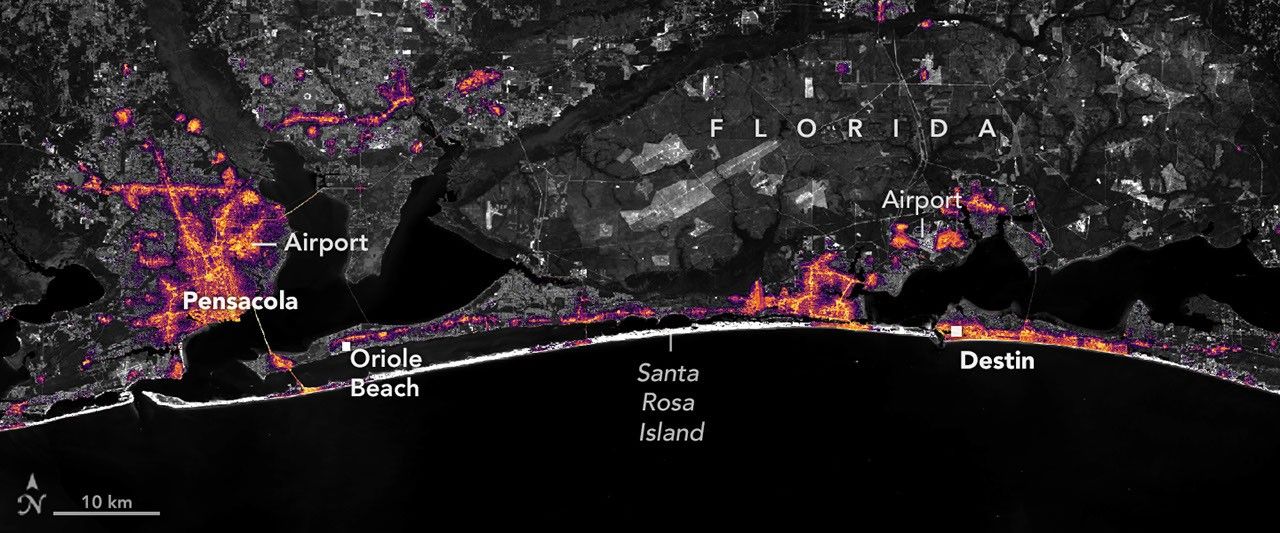
Isaias Dims the Gulf Coast
UPDATEDScience·Published 4d ago · updated 2d ago

Isaias Dims the Gulf Coast

NASA published an article titled 'Isaias Dims the Gulf Coast' on October 16, 2026.

1 sources· Confidence LOW
Zimbabwean author Simbarashe Kundizeza denies using AI to write prize-winning story
UPDATEDWorld·Published 6d ago · updated 2d ago

Zimbabwean author Simbarashe Kundizeza denies using AI to write prize-winning story

<p>Article in Atlantic claims The Blue Fighter was artificially generated, days after it won Caine prize for African writers</p><p>The Zimbabwean writer Simbarashe Kundizeza has denied using AI to write a prize-winning short story after an article in the Atlantic said software had flagged it as almost completely AI-generated.</p><p>Kundizeza’s story <a href="https://static1.squarespace.com/static/6a4f3fb6a6178e0225b39a4c/t/6a95fffc36f1fc568e02f7fe/1788215293124/3.The+Blue+Fighter.pdf">The Blue Fighter</a> was announced as the winner of the prestigious Caine prize for African writers on 6 October. Five days later, The Atlantic published an <a href="https://www.theatlantic.com/books/2026/10/caine-prize-winning-short-story-seems-be-ai/688967/">article</a> by the author and journalist Vauhini Vara titled: “Yet Another Literary prize winner Seems to Be AI.”</p> <a href="https://www.theguardian.com/technology/2026/oct/14/zimbabwean-author-simbarashe-kundizeza-denies-ai-story">Continue reading...</a>

1 sources· Confidence LOW
UPDATEDScience·Published 4d ago · updated 2d ago

SpaceX just delivered some very strange cargo to the International Space Station

SpaceX just delivered some surprisingly strange cargo to the International Space Station, including tiny brain models, 3D heart tissue, and technology for making artificial retinas in space. Scientists hope these experiments could unlock new ways to treat devastating brain diseases, restore eyesight, and test future medicines. The shipment also includes materials for creating unusual glass in near weightlessness and the station’s final upgraded solar arrays.

1 sources· Confidence LOW
Tesla turns to 50-year-old stunt technology as it tries to Roadster again
UPDATEDTechnology·Published 4d ago · updated 2d ago

Tesla turns to 50-year-old stunt technology as it tries to Roadster again

Nine years after first trying to resurrect the Roadster , Tesla is apparently trying again. CEO Elon Musk might have relocated its HQ to Texas, but yet again he has returned to California’s showbiz industry to hawk his wares; last time it was a Hollywood back lot for the remote-controlled Cybercab demo , last night it was decades-old stunt technology to make a show car do tricks in the air. The new Roadster, we’re told, will be unlike anything else, although the angular, wedge-shaped styling owes more than a little to Giorgetto Giugiaro’s original Lotus Esprit—Musk is known to own a James Bond prop car—as well as the more recent Lamborghini Gallardo. At the rear are four giant exhaust pipes; these do not signal Tesla’s sudden embrace of hydrocarbons beyond those emitted by private aviation. Rather, it’s where 100,000 psi jets of compressed nitrogen shoot out. It’s early in the morning and the Federal Motor Vehicle Safety Statutes are dense reading, so I am yet to find the section where it explains how and when it’s legal to use such a thing on the road. Read full article Comments ]]>

1 sources· Confidence LOW
Anthropic gives outside AI watchdog “employee-like” access
DEVELOPINGTechnology·Published 2d ago · updated 2d ago

Anthropic gives outside AI watchdog “employee-like” access

Anthropic has granted external evaluators “employee-like access” to assess the risks of its models, following through on a commitment to increase safeguards over concerns the technology could run catastrophically out of control. METR, a nonprofit that has worked with leading labs including OpenAI, Anthropic, Google and Meta, now has a team embedded in the Claude maker’s office with access to its hardware and internal systems. A greater role for third-party evaluators is among the main concrete steps the labs have proposed in response to rising concern about the dangers more capable AI systems could pose to the economy, cyber security and humanity at large. Read full article Comments ]]>

1 sources· Confidence LOW
Why Europe has been absent from the great AI safety debate
ARCHIVEDWorld·Published 32d ago · updated 31d ago

Why Europe has been absent from the great AI safety debate

<p>Though Europe has measures that address how consumers might encounter AI, technology will impact them if the worst scenarios bear</p><p>Europe’s dilemma over AI was rendered in stark terms this week. The head of the continent’s central bank, Christine Lagarde, said Europeans have two options: shun the technology and lose out on growth; or embrace it and become dependent on tools developed by the US and China.</p><p>The great debate over AI safety that has erupted in recent days threatens to make the choice moot. If the worst scenarios come to bear – <a href="https://www.theguardian.com/technology/2026/sep/15/could-ai-really-wipe-out-humanity-and-hijack-the-internet">and experts have differing views on this</a> – then the technology will impact the continent regardless.</p> <a href="https://www.theguardian.com/technology/2026/sep/18/europe-ai-safety-debate">Continue reading...</a>

1 sources· Confidence LOW
Andrew Hastie says AI advised him to reply ‘congratulations!’ to man who planned to end life with assisted dying
ARCHIVEDWorld·Published 32d ago · updated 31d ago

Andrew Hastie says AI advised him to reply ‘congratulations!’ to man who planned to end life with assisted dying

<p>Liberal MP speaks of AI’s shortcomings as cyber chief tells inquiry the tech is needed to fend off ‘highly capable malicious cyber actors’</p><ul><li><p>Get our <a href="https://www.theguardian.com/email-newsletters?CMP=cvau_sfl">new political email</a>, <a href="https://app.adjust.com/w4u7jx3">free app</a> or <a href="https://www.theguardian.com/australia-news/series/full-story?CMP=cvau_sfl">daily news podcast</a></p></li></ul><p>When a man with a terminal illness wrote to his local MP Andrew Hastie, telling him he planned on ending his own life with voluntary assisted dying, Microsoft Copilot suggested Hastie reply with “congratulations!”, “great to hear from you” or “that is wonderful news!”.</p><p>Hastie shared the episode at a parliamentary inquiry on Friday to underline the shortcomings of the American-run software as he called for AI run by Australians.</p> <a href="https://www.theguardian.com/technology/2026/sep/18/andrew-hastie-says-ai-advised-him-to-reply-congratulations-to-man-who-planned-to-end-life-with-assisted-dying">Continue reading...</a>

1 sources· Confidence LOW
Swedish teenager jailed for attempted murder, rape and assault committed online, with victims in Germany and Australia
ARCHIVEDWorld·Published 32d ago · updated 31d ago

Swedish teenager jailed for attempted murder, rape and assault committed online, with victims in Germany and Australia

<p>Eighteen-year-old known as Chai was active in networks notorious for their sadistic exploitation of young people</p><p>A Swedish teenager known as Chai has been sentenced to more than 10 years in jail for attempted murder, rape and aggravated assault – crimes committed via the internet, <a href="https://www.theguardian.com/technology/ng-interactive/2026/jul/21/764-network-gamification-of-harm-the-com-cybercrime-ntwnfb">including against a teenage girl in Australia</a>.</p><p>The district court found that Chai, 18, was active in online networks notorious for their sadistic extortion of young and vulnerable people, coercing them to create sexually explicit material or engage in acts of violence – and for the youth of those involved.</p><p><em>In Australia, support is available at <a href="https://www.beyondblue.org.au/">Beyond Blue</a> on 1300 22 4636, <a href="https://www.lifeline.org.au/">Lifeline</a> on 13 11 14, and at <a href="https://mensline.org.au/">MensLine</a> on 1300 789 978. In the UK, the charity <a href="https://www.mind.org.uk/">Mind</a> is available on 0300 123 3393 and <a href="https://www.childline.org.uk/">Childline</a> on 0800 1111. In the US, call or text <a h

1 sources· Confidence LOW
ARCHIVEDScience·Published 34d ago · updated 31d ago

Scientists turn seawater into fresh water without harmful brine

Scientists have developed a solar-powered desalination system that turns seawater into fresh water while removing nearly all of the leftover salt as a solid instead of producing harmful brine. The self-cleaning technology could also recover valuable minerals such as lithium, potentially turning desalination waste into a useful resource.

1 sources· Confidence LOW
2026 Hyundai Ioniq 5: Here's what we still like, here's what annoys us
ARCHIVEDTechnology·Published 33d ago · updated 31d ago

2026 Hyundai Ioniq 5: Here's what we still like, here's what annoys us

When we first drove the Hyundai Ioniq 5 at the end of 2021 , it didn’t take much exposure to the angular electric vehicle to find much about it appealing. Back then, an 800 V architecture had only really been seen in expensive high-end EVs from Porsche, but here was a mainstream model with that same technology—and even faster fast-charging, taking just 18 minutes to go from 10–80 percent. The retro looks didn’t hurt either, channeling the boxy hatches styled by Giorgetto Giugiaro in the 1970s and '80s. But five years is a long time in the car world, and the compact electric crossover segment is far more competitive than it was when the Ioniq 5 debuted. We figured it was worth spending some more time with one to see how it still stacks up. Although the Ioniq 5 range starts at $35,000 for the standard range model, our test car was a 2026 Ioniq 5 AWD Limited, which has an 84 kWh battery pack—part of the lifecycle refresh in early 2025 that also swapped in a NACS (J3400) charge port in place of the CCS1 port you’d find on earlier cars. Among the other additions that arrived as part of the 2025 refresh was a rear windshield wiper, which was sorely needed at launch. This range-topping tr

1 sources· Confidence LOW
Small AI models let drones autonomously identify and attack battlefield targets
ARCHIVEDTechnology·Published 33d ago · updated 31d ago

Small AI models let drones autonomously identify and attack battlefield targets

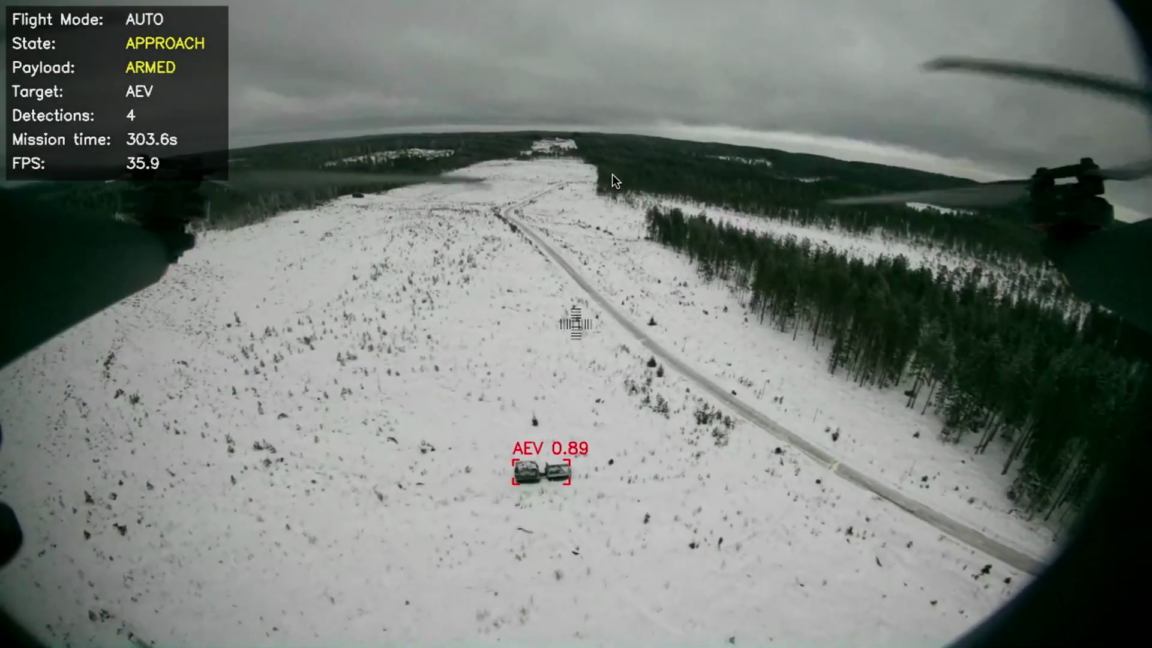
As European militaries adapt to the use of AI and drones in modern warfare, a NATO-backed startup is helping to deploy AI-driven target detection and selection that can run on small drones for surveillance and attack missions. The company, Scaleout Systems, was originally founded by researchers from Uppsala University in Sweden in 2018, and initially focused on training and deploying machine learning models directly on the hardware available in commercial trucks and other vehicles. But once Russia launched its full-scale invasion of Ukraine in 2022, the company pivoted toward defense applications. “With the war in Ukraine and a shifting world, we realized that this technology can be very important to operationalize edge data and sensor data for machine learning to make sure that NATO allies have found that strategic advantage,” Andreas Hellander, cofounder and CEO of Scaleout Systems, told Ars. Read full article Comments ]]>

1 sources· Confidence LOW
ARCHIVEDScience·Published 36d ago · updated 36d ago

An Early Look at Fall Color in Canada

Earth Observatory Science Earth Observatory An Early Look at Fall Color in… Earth Earth Observatory Image of the Day EO Explorer Topics All Topics Atmosphere Land Heat & Radiation Life on Earth Human Dimensions Natural Events Oceans Remote Sensing Technology Snow & Ice Water More Content Collections Global Maps World of Change Articles Earth Matters Blog Blue Marble: Next Generation EO Kids Mission: Biomes About About Us Subscribe 🛜 RSS Contact Us Search July 27 September 6 NASA Earth Observatory/Michala Garrison NASA Earth Observatory/Michala Garrison July 27 September 6 NASA Earth Observatory/Michala Garrison NASA Earth Observatory/Michala Garrison July 27 September 6 Curtain Toggle 2-Up Image Details Autumn color sweeps across the low-growing shrubs and tundra vegetation of Nunavut, Canada, in this image pair captured by the OLI (Operational Land Imager) on Landsat 9 . NASA Earth Observatory images by Michala Garrison. As North America rode out a summer of remarkable heat , fall foliage and cool, crisp weather still seemed like distant, alien concepts across much of the continent in early September 2026. But fall comes early in the tundra and subarctic ecosystems of Nunavut, in

1 sources· Confidence LOW
ARCHIVEDWorld·Published 36d ago · updated 36d ago

AI-linked stocks fall after tech bosses call for slowdown in ‘reckless’ development

<p>Shares in tech firms tumble across Asia with Nasdaq also likely to dip later after Anthropic, OpenAI and SpaceX leaders back call</p><ul><li><p><a href="https://www.theguardian.com/business/live/2026/sep/14/ai-stocks-fall-development-slowdown-anthropic-openai-investors-latest-news-updates">Business news – live updates</a></p></li></ul><p>AI-linked stocks tumbled on Monday after the bosses of Anthropic, OpenAI and SpaceX called for a <a href="https://www.theguardian.com/technology/2026/sep/13/openai-sam-altman-elon-musk-back-anthropic-calls-brakes-ai-development">slowdown in “reckless” development</a> citing fears the technology could soon run out of control.</p><p>Shares in SoftBank, a Japanese investor that is a big backer of OpenAI, slumped 13%, while the South Korean Kospi stock index, which relies heavily on chip makers that supply AI companies, dropped by 3%.</p> <a href="https://www.theguardian.com/business/2026/sep/14/ai-linked-stocks-fall-tech-bosses-call-slowdown-anthropic-openai">Continue reading...</a>

1 sources· Confidence LOW
ARCHIVEDTechnology·Published 39d ago · updated 36d ago

Claude users found ways around safeguards for bioweapons research

Anthropic said it stopped multiple attempts by scientists this year to use its technology for research that could help develop biological weapons, as experts increasingly fear the threat that AI poses to public safety. The startup gave five examples of times actors “circumvented controls” and made other efforts to “obfuscate” the purpose of their research to dodge safeguards. The cases involved some users in nations that it prohibits from accessing its models, which include Russia, China, and Iran. “We hope that by sharing these examples, we spark a conversation within the AI industry and with governments about emerging biological risks and how best to counter them,” Anthropic said in a report about efforts to use its models for malicious activity. Read full article Comments ]]>

1 sources· Confidence LOW
ARCHIVEDScience·Published 40d ago · updated 36d ago

Scientists create brilliant white material without a drop of white pigment

Researchers have created a foam-based material that produces intense whiteness and water repellency without titanium dioxide pigments or PFAS chemicals. Inspired by natural structures in snow, clouds, flowers, and lotus leaves, the material uses tiny pores to scatter light while its rough surface repels water. The technology could offer a more sustainable way to make white, water-resistant everyday materials.

1 sources· Confidence LOW
ARCHIVEDScience·Published 37d ago · updated 36d ago

NASA-backed scientists turn plastic waste into edible cookies

Scientists have engineered yeast to turn PET plastic and agricultural waste into ingredients for protein-rich, 3D-printed cookies called µBites. Developed partly for NASA’s Deep Space Food Challenge, the system can produce proteins, fats, vitamins, and even vanilla flavoring from waste materials. Researchers hope the unusual technology could eventually help address both plastic pollution and food insecurity, while also supplying food in extreme environments such as deep-space missions.

1 sources· Confidence LOW