News intelligence
How we verify
Newsei Topic

energy

Energy news covers oil and gas markets, power grids, renewables and nuclear power. Newsei groups supply, price and policy stories across outlets and links to explainers on the technologies involved.

By Newsei · Guide updated

Energy systems and supply

Energy systems convert resources into electricity, heat, and fuels, then deliver them through networks to homes, businesses, and industry. Sources include fossil fuels, nuclear power, hydropower, wind, solar, geothermal energy, and biomass. Each has different operating characteristics, costs, environmental effects, and infrastructure needs. Electricity is only one part of energy use; transport and industrial heat also rely on fuels. Energy stories should specify which form of energy is being discussed and whether a figure refers to capacity, generation, consumption, or investment.

Energy security concerns the reliability and affordability of supply, exposure to disruptions, and ability to recover. Countries differ in domestic resources, import dependence, infrastructure, and policy. A new power plant or pipeline may take years to permit and build, while demand and market conditions can change during that time. Announced projects do not guarantee completed capacity. Official energy statistics, regulator records, system operators, and company filings can help establish what is operating and how the system is changing.

Electricity generation and grids

Electricity is generated by power plants and distributed through transmission and local distribution networks. Grid operators balance supply and demand continuously while maintaining voltage and frequency within operating limits. Different generators can provide energy, capacity, or services that help stabilize the system. A plant’s nameplate capacity is its maximum rated output, not its annual electricity production. Capacity factors and maintenance schedules affect how much energy it actually supplies.

Wind and solar output varies with weather and time, so integrating larger shares may require transmission expansion, storage, flexible demand, improved forecasting, and a mix of other resources. These are system-planning questions rather than evidence that variable generation is inherently unusable. A grid’s needs depend on geography, interconnection, storage, demand patterns, and existing generation. Reports about reliability should identify the measured event and time period. A single outage or record output may reveal something important but does not by itself describe the performance of an entire system.

Oil, gas, and markets

Oil and natural gas are traded through complex markets involving production, transport, storage, processing, and contracts. Prices can respond to supply and demand, weather, geopolitical events, infrastructure constraints, and expectations. A quoted benchmark price is not the price every consumer or producer receives. Refining capacity, transport costs, taxes, and local market conditions affect retail prices. Natural gas may be delivered through pipelines or as liquefied natural gas, which requires specialized facilities and shipping.

Energy market forecasts are uncertain because they depend on assumptions about demand, production, policy, and technology. A company’s announced production plan is not the same as realized output. Inventory, shipping, and maintenance data provide different pieces of context. Governments may release strategic reserves or impose restrictions, but effects depend on scale and market response. Coverage should identify the benchmark, currency, unit, time period, and source of any price figure. This makes it easier to compare developments without confusing a short-term price movement with a lasting change in supply.

Renewables, nuclear, and emerging technologies

Renewable energy includes sources replenished on human timescales, such as wind, solar, hydropower, and geothermal. Their potential and impacts vary by location and design. Hydropower can provide flexible generation but may affect rivers and communities. Wind and solar projects require land, materials, grid connections, and planning. Life-cycle comparisons consider emissions and environmental effects from manufacturing through operation and end of life, rather than only emissions during generation.

Nuclear fission generates electricity by splitting heavy atomic nuclei and is used commercially in many countries. Nuclear fusion, by contrast, joins light nuclei and remains an area of research and development; no commercial fusion power plant currently supplies electricity to the grid. Emerging technologies may show promising experimental results without being economically or technically ready for broad deployment. Coverage should distinguish laboratory demonstration, pilot project, licensed facility, and commercial operation. Safety, waste, financing, construction time, and public acceptance are relevant considerations for nuclear technologies.

Energy transition and climate

The energy transition refers to changes in how energy is produced and consumed, including efforts to reduce greenhouse-gas emissions and air pollution. It involves replacing or modifying infrastructure, changing technologies, and managing demand. Electrification can reduce direct fossil-fuel use in transport and buildings, but the climate benefit depends partly on how electricity is generated. Efficiency can reduce energy needs while maintaining services, though lower costs may influence total consumption. Policy choices shape the pace and distribution of change.

Energy systems also affect land, water, air quality, biodiversity, and communities. Mining materials for batteries, turbines, and grids can create local impacts and supply-chain concerns. Fossil fuel production can affect nearby communities and ecosystems. Evaluations should consider the full life cycle and compare alternatives that provide the same service. “Low carbon,” “renewable,” and “clean” have different meanings in policy and technical contexts. A clear report defines its terms and states whether it refers to operating emissions, life-cycle emissions, or another measure.

Prices, consumers, and policy

Household energy bills reflect more than the wholesale price of a fuel or electricity. They may include network charges, taxes, fees, subsidies, and fixed costs. Price structures vary by jurisdiction and customer type. A headline price decline may not immediately appear on bills, while changes in fuel costs can affect electricity prices differently depending on market design. Comparing bills requires specifying the location, usage level, tariff, and period.

Governments use regulation, taxes, subsidies, standards, public investment, and market rules to shape energy systems. A policy can have different effects on consumers, producers, and taxpayers. Proposals may change during legislative or regulatory processes, and announced funding may not be spent immediately. Evaluation should distinguish a policy’s stated purpose from measured outcomes, and account for external factors such as fuel prices and weather. Regulatory filings and budget documents provide primary evidence; independent analysis can help interpret expected costs and effects.

How to assess energy claims

Useful questions include whether a project is proposed, financed, permitted, under construction, or operating; what capacity it provides; and what output it has delivered. A megawatt measures power capacity, while a megawatt-hour measures energy over time. Confusing these units can greatly distort claims. Cost figures should identify whether they include financing, grid connection, fuel, decommissioning, or subsidies. Forecasts should be presented with assumptions and ranges.

Energy debates often involve competing priorities: affordability, reliability, emissions, local impacts, and energy independence. Evidence can inform trade-offs but does not eliminate value judgments. Compare sources such as grid operators, regulators, statistical agencies, research institutions, and company disclosures. Be attentive to the date and geographic scope, because energy systems change and results from one region may not transfer directly to another. Clear definitions and transparent assumptions make the discussion more useful than broad claims that one source or technology solves every energy problem.

Demand, efficiency, and real-world comparisons

Energy efficiency means providing a service with less energy input. Insulation can reduce the energy needed to maintain indoor temperatures, while a more efficient motor can reduce electricity per unit of work. These comparisons require equivalent service and conditions. Lower consumption caused by producing less output is not necessarily an efficiency improvement. Reports should identify what service is being delivered and whether the measurement accounts for changes in weather, occupancy, production, or equipment use.

Demand response changes when or how much electricity customers use in response to prices, signals, or contractual arrangements. It differs from generating electricity, although reducing demand at a critical time can help balance a grid. Participation can involve automated controls or voluntary choices, and not every household or business can shift its usage easily. Programme results should account for customer costs, comfort, reliability, and the assumptions used to estimate what consumption would otherwise have been. An announced potential reduction is not the same as a measured response during an actual system stress event.

For accessible definitions and datasets, consult the US Energy Information Administration at https://www.eia.gov/energyexplained/ and the International Energy Agency at https://www.iea.org/. Local grid operators and utilities publish system rules and operational information relevant to their own areas. A national annual total may conceal local constraints at particular hours. Readers should avoid generalizing a result from one grid to all others without considering resources, interconnections, market arrangements, geography, and seasonal demand.


Latest stories

Hilarious quips and ‘100,000-volt’ energy: the hypemen (and women) redefining Afrobeats music
DEVELOPINGWorld·Published 2d ago · updated 2d ago

Hilarious quips and ‘100,000-volt’ energy: the hypemen (and women) redefining Afrobeats music

<p>Style of emceeing based on high-octane, ad-libbed vocals has flourished thanks to its unique way of captivating crowds</p><p>For the 2015 freshmen cohort of the history degree programme at the University of Lagos, their classmate’s first-semester presentation was so captivating that they began calling him Toby Shang, after the 16th-century Chinese dynasty he had focused on.</p><p>His crowd engagement that day had been harnessed from his high school days as a ginger-man (energiser) in a three-man band and as a private tutor. By his final year at university, his viral catchphrases and infectious energy had resulted in a hit song, Shedibalabala. Today, he is one of the self-acclaimed “evangelists and pioneers” in the Afrobeats sub-genre some are now calling Afrohype or lamba.</p> <a href="https://www.theguardian.com/world/2026/oct/18/lagos-hypemen-redefining-afrobeats-music-afrohype">Continue reading...</a>

1 sources· Confidence LOW
NASA Awards Launch Services for StarBurst Gamma-Ray Detector
ARCHIVEDScience·Published 33d ago · updated 31d ago

NASA Awards Launch Services for StarBurst Gamma-Ray Detector

Credit: NASA NASA has selected SpaceX to provide launch services for the agency’s StarBurst mission, a small satellite designed to investigate neutron star mergers and the origins of short gamma-ray bursts. StarBurst will launch aboard a Bandwagon rideshare mission on a Falcon 9 rocket from Space Launch Complex 40 at Cape Canaveral Space Force Station in Florida no earlier than 2028. The selection is a firm-fixed-price task order under NASA’s VADR (Venture-Class Acquisition of Dedicated and Rideshare) launch services contract. This indefinite-delivery/indefinite-quantity contract allows NASA to acquire launch services during a 10-year ordering period, with a maximum total value of $1 billion across all contracts. The StarBurst mission is designed to observe the entire portion of the sky not blocked by Earth to search for brief, powerful explosions called gamma-ray bursts. The satellite will focus on detecting the initial high-energy emission from short gamma-ray bursts, which occur when dense stellar remnants called neutron stars merge. By combining StarBurst’s observations with gravitational-wave measurements and follow-up observations from other telescopes, researchers will study

1 sources· Confidence LOW
Record fuel prices across EU prompt calls for bloc-wide windfall tax on firms
ARCHIVEDWorld·Published 31d ago · updated 31d ago

Record fuel prices across EU prompt calls for bloc-wide windfall tax on firms

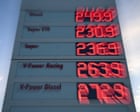
<p>German minister says companies are ‘exploiting situation’ in Middle East, as sky-high prices become major domestic issue for leaders</p><p>European governments have discussed imposing a bloc-wide windfall tax on energy companies, as near-record fuel and gas prices pile pressure on leaders desperate to contain mounting public discontent and the challenge of the far right.</p><p>With elections due next year in eight EU countries including France, Italy, Spain and Poland, leaders are scrambling to head off the potential fallout from what analysts have warned could be one of the continent’s biggest energy shocks in decades.</p> <a href="https://www.theguardian.com/world/2026/sep/18/eu-europe-fuel-prices-calls-windfall-tax-energy-firms">Continue reading...</a>

1 sources· Confidence LOW
‘We have something that will kill Elliott’: Icac questions former Labor councillor over message
ARCHIVEDWorld·Published 32d ago · updated 31d ago

‘We have something that will kill Elliott’: Icac questions former Labor councillor over message

<p>Sharangan Maheswaran denies message he received about NSW minister was related to work for fugitive property developer</p><ul><li><p><a href="https://www.theguardian.com/australia-news/live/2026/sep/18/labor-migration-plan-tony-burke-coalition-qantas-renewable-energy-ntwnfb">Follow our Australia news live blog for latest updates</a></p></li><li><p>Get our <a href="https://www.theguardian.com/email-newsletters?CMP=cvau_sfl">new political email</a>, <a href="https://app.adjust.com/w4u7jx3">free app</a> or <a href="https://www.theguardian.com/australia-news/series/full-story?CMP=cvau_sfl">daily news podcast</a></p></li></ul><p>A former Labor councillor says he had a “common interest” with a conservative Liberal operative, but denied that a message he received about damaging the reputation of NSW Liberal minister David Elliott was related to political work for a fugitive property developer, an inquiry has heard.</p><p>Sharangan Maheswaran told the Independent Commission Against Corruption (Icac) on Friday that a message sent to him by lobbyist Jeremy Greenwood claiming “We have something that will kill Elliott” did not relate to work by Greenwood’s company Beckington for Jean Nassif

1 sources· Confidence LOW
IV drips used for "detoxification" actually filled with toxins; dozens poisoned
ARCHIVEDTechnology·Published 33d ago · updated 31d ago

IV drips used for "detoxification" actually filled with toxins; dozens poisoned

Over 30 people across four states have been poisoned by bacterial toxins after getting intravenous (IV) drips at wellness clinics, according to the Centers for Disease Control and Prevention and the Food and Drug Administration . The people had received IV drips containing glutathione, which is sold—without evidence—for purposes like detoxification, immune support, increased energy, and skin brightening. Glutathione is an antioxidant that's found naturally in the body. It has been studied as a potential treatment for various ailments, but so far there is little to no evidence-backed use for the tripeptide; there are no FDA-approved glutathione products in the US. Nevertheless, it's commonly used as a supplement and promoted as having various benefits. It's most often used in supplement pills, taken by mouth. But popular wellness clinics offering IV drips of vitamins and other supplements have also been offering glutathione. According to the CDC and FDA, the problem is that specialty drug makers, called compounding pharmacies, are making these IV drips using glutathione powders that are graded for dietary supplements taken orally. This grading is critically different from that of pu

1 sources· Confidence LOW
ARCHIVEDTechnology·Published 39d ago · updated 36d ago

Oracle tries to appease Stargate data center opponents with renewables push

Oracle’s proposed investment in 2 gigawatts of renewable energy projects for New Mexico comes as local opposition could delay development of the Project Jupiter data center that Oracle is building for OpenAI. The two tech companies are developing the $165 billion Project Jupiter data center in Santa Teresa, New Mexico, as part of the broader Stargate AI infrastructure project announced by President Donald Trump in 2025. But Project Jupiter faces local protests and court battles over concerns about its environmental impacts—and the latest Oracle announcement on September 8 seeking proposals for renewable energy projects does not change the fact that the data center will be powered by fuel cells that consume natural gas. “Like all matching programs, this would be synthetic in the sense that 2 GW of renewables wouldn't directly power the data center,” wrote Michael Thomas, CEO of the Cleanview data platform that tracks renewable energy and data center projects, in a LinkedIn post . Read full article Comments ]]>

1 sources· Confidence LOW
ARCHIVEDTechnology·Published 39d ago · updated 36d ago

Trump's forced coal plant extensions thrown out by judge

The use of coal to generate electricity on the US grid has been plunging for nearly two decades, and the first Trump administration was unable to affect the trend. So his second administration has attempted more aggressive interventions to prop up coal use. One of its most direct means of doing so is to order coal plants that were scheduled to close to remain open , even if there is no need for them . The administration's justification for these orders is a statute that allows the Department of Energy (DOE) to declare an emergency in the case of wartime or a sudden shortfall in generation. A number of parties, including states where coal plants have been slated to close, have challenged this declaration. And on Friday, in the first of these cases to make its way through the courts, the declaration was judged to be contrary to the statute. While this only affects a single coal plant in Michigan, the reasoning of the decision will apply to every coal plant closure that has been blocked by the DOE. No emergency The decision was issued by a unanimous three-judge panel from the DC Circuit's Court of Appeals. It focuses on the J.H. Campbell Generating Plant, which was scheduled to close

1 sources· Confidence LOW
ARCHIVEDTechnology·Published 39d ago · updated 36d ago

Bouncy castle launches horrifying MRSA outbreak, striking 48 kids in Ireland

For a child bursting with energy, few things are more fun than hurtling through a bouncy castle, launching into the air, and ping-ponging between every surface. But that childhood buoyancy will quickly deflate when it turns out those surfaces are smeared with a hypervirulent, multidrug-resistant pathogen. That was the horrifying reality for a community in Ireland in fall 2025. Neighbors had gathered for an afternoon of merriment, complete with a barbecue, a sweets station, and three bouncy castles. Officials estimate that about 120 people joined the festivities, and around half of them were children and teens. Within a day, some children began developing signs of an infection. In all, 48 children in the community developed aggressive skin and soft-tissue infections. Of the 48 cases, 33 were treated by their regular doctor, and 15 sought emergency care. Four children ended up being hospitalized. Luckily, all of the children recovered. The results of the outbreak investigation were reported this week in the journal Eurosurveillance . Read full article Comments ]]>

1 sources· Confidence LOW
ARCHIVEDScience·Published 41d ago · updated 40d ago

Dark energy debunked? Cosmic acceleration may be an illusion

A new analysis of over 1,700 supernovae suggests the observed cosmic acceleration may be an illusion caused by stellar age effects and directional variation.

1 sources· Confidence LOW
ARCHIVEDScience·Published 42d ago · updated 40d ago

Caffeine may flip an ancient cellular switch linked to slower aging

Researchers report that caffeine activates an ancient cellular energy system linked to stress resistance, DNA repair, and growth.

1 sources· Confidence LOW
ARCHIVEDTechnology·Published 46d ago · updated 42d ago

After 8 years, Europe's BepiColombo mission is on final approach to Mercury

The BepiColombo mission cleared a major milestone this week in the final stretch of an eight-year interplanetary voyage to Mercury, the hard-to-reach, scorching hot iron world at the Solar System's innermost frontier. The robotic science mission, with a price tag of nearly $2 billion, is led by the European Space Agency with contributions from Japan and the United States. Since its launch in 2018, BepiColombo has spiraled closer to the Sun using a combination of plasma propulsion and a series of flybys of Earth, Venus, and Mercury. The maneuvers changed the spacecraft's velocity and steered it toward a final encounter with Mercury later this year. Next time it reaches Mercury, BepiColombo will be traveling at just the right speed for the planet's gravity to capture the spacecraft into orbit. Scientists working on interplanetary missions are accustomed to long waits for scientific payoffs. It took nearly 10 years for NASA's New Horizons spacecraft to travel from Earth to Pluto. It turns out traveling to fleet-footed Mercury and then entering orbit requires more energy, or delta-v, than sending a probe to fly by Pluto. Read full article Comments ]]>

1 sources· Confidence LOW